CNC Swiss Machining Capabilities
Swiss-Type CNC Machining
Providing exceptional support for small-diameter, slender, and structurally complex precision rotary parts.
Swiss-type CNC machining supports the bar material near the cutting position, which significantly reduces deflection, vibration, and deformation during the machining of slender parts.
It is highly suitable for small-diameter precision parts that are extremely difficult to manufacture on standard CNC lathes. By utilizing continuous bar stock feeding, processes such as turning, drilling, tapping, grooving, and local milling can be completed in a single setup.
Core Advantage:
Completing compound structures in one setup drastically reduces refixturing errors, making it the perfect solution for low-to-medium volume and repetitive mass production of precision components.
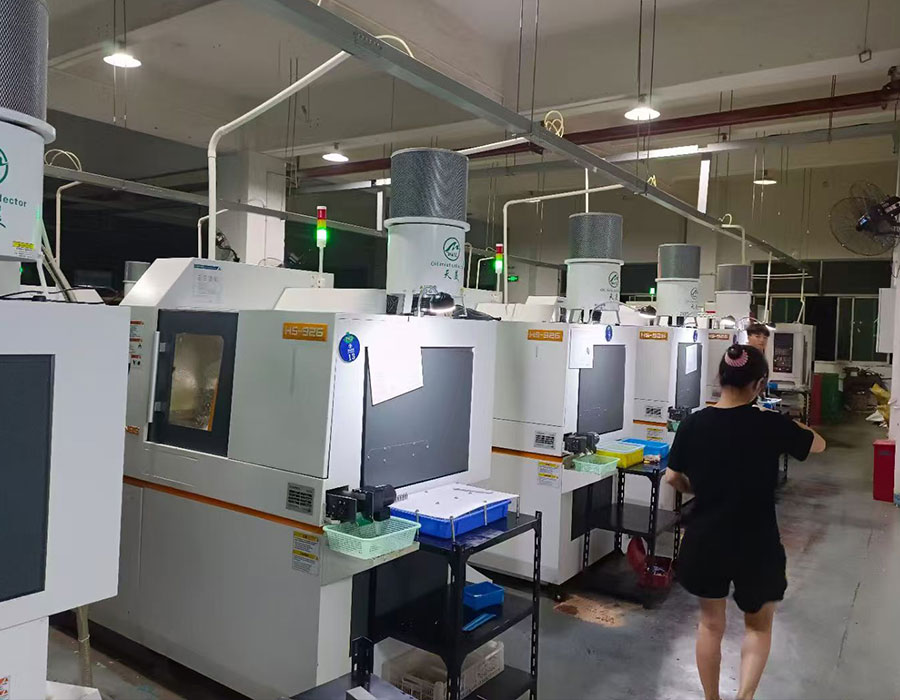
Swiss Machining Capabilities & Specs
| Machining Item | Reference Capability |
|---|---|
| Machining Accuracy | Standard dimensional tolerances can be controlled within ±0.01 mm |
| Blank Form | Round bars, hex bars, and other bar stock suitable for continuous feeding |
| Turning Features | Outer diameters, inner bores, end faces, steps, tapers, arcs, and grooves |
| Threading | Internal threads, external threads, and precision micro-threads |
| Hole Processing | Axial holes, radial holes, through holes, blind holes, and multi-hole structures |
| Compound Machining | Drilling, tapping, and local milling tailored to the part's structure |
| Applicable Parts | Small-diameter, slender, complex rotary, and turn-mill compound parts |
| Applicable Materials | Stainless steel, carbon steel, alloy steel, aluminum, copper, and copper alloys |
| Order Types | Prototypes, small-to-medium batch, and repetitive mass production |
Note: Actual achievable dimensional tolerances depend on the material, part diameter, length-to-diameter ratio, structural complexity, and critical dimension locations. Specific process evaluations are conducted based on customer drawings.
Main Machining Features
Specific machining operations are evaluated based on part structure, tooling space, and fixturing methods.
Outer Diameters, Inner Bores & End Faces
Ideal for shafts, pins, bushings, and precision rotary parts, accommodating multiple OD and ID dimensions based on the structure.
-
Precision outer diameters
-
Inner bores and end faces
-
Multi-segment ODs
-
Steps and shoulders
-
Tapers and arcs
-
Locating and mating faces
Grooves & Formed Structures
Capable of machining a variety of grooves and local formed structures required for sealing, assembly, and positioning.
-
Seal grooves
-
Circlip/Snap-ring grooves
-
Undercuts
-
Ring grooves
-
Narrow & multi-groove structures
-
Local chamfers and fillets
Threading
Suitable for internal and external threaded structures on valve stems, connectors, fittings, and precision small shafts.
-
Metric ID/OD threads
-
Imperial ID/OD threads
-
Small dia. precision threads
-
End connection threads
-
Thread & step combos
Drilling, Tapping & Local Milling
Utilizing live/driven tooling, we can complete axial and radial features on rotary parts depending on the component's structure.
-
Axial through & blind holes
-
Radial & side holes
-
Eccentric & cross holes
-
End face drilling & tapping
-
Side drilling & tapping
-
Local flat & slot milling
Parts Perfectly Suited for Swiss Machining
Swiss-type turning is exceptionally tailored for the following types of custom parts:
-
Slender parts with small diameters and long lengths.
-
Shaft parts featuring multiple steps and grooves.
-
Compound parts containing turning, drilling, and milling structures simultaneously.
-
Precision parts requiring strict control over OD, coaxiality, and surface condition.
-
Repetitive mass production parts that need continuous bar feeding.
-
Slender parts that easily suffer from vibration or deformation during standard lathe machining.
Typical Machined Parts
Valves & Fluid Control
-
Precision valve stems
-
Spool pins & valve needles
-
Plungers & spool valves
-
Guide & adjusting rods
Precision Shafts & Pins
-
Small dia. shafts
-
Guide & Locating pins
-
Dowel pins & mandrels
-
Optical & micro shafts
Bushings & Connectors
-
Precision bushings
-
Threaded inserts
-
Pipe fittings & fasteners
-
Sensor & instrument parts
Precision Valve Stem Machining
Precision valve stems typically feature small diameters, slender profiles, multi-segment outer diameters, grooves, and threaded structures. Many of these parts also require subsequent hard chrome plating and precision grinding.
Swiss machines are ideal for the precision machining of the blank prior to plating, establishing a stable dimensional foundation for subsequent surface treatments and final grinding.
Machinable Valve Stem Structures:
-
Valve stem working ODs
-
Multi-steps & shoulders
-
Seal & circlip grooves
-
End ID/OD threads
-
Axial & radial holes
-
Pre-hard chrome allowances
Engineering the Dimensional Chain
For valve stems, the machining plan must holistically consider:
-
Final finished component dimensions
-
Hard chrome plating thickness
-
Post-plating grinding allowance
-
Working segment OD & length
-
Positional relationship between grooves and working ODs
-
Part length-to-diameter ratio & machining deformation
-
Fixturing conditions for subsequent centerless or cylindrical grinding
For valve stems requiring hard chrome and final grinding, EADAmetal reverse-calculates the pre-plating dimensions, plating thickness, and grinding allowances from the final finished size, minimizing the risk of dimensional mismatches between different operations.
Machinable Materials
| Material Category | Typical Applications |
|---|---|
| Stainless Steel | Valve stems, plungers, spool pins, guide rods, and corrosion-resistant precision parts. |
| Carbon Steel | Small shafts, pin shafts, connectors, fasteners, and parts acting as plating substrates. |
| Alloy Steel | High-strength small shafts, wear-resistant pins, mandrels, and load-bearing parts. |
| Aluminum Alloys | Lightweight fittings, bushings, connectors, and instrument parts. |
| Brass | Valve parts, pipe fittings, bushings, and precision turned parts. |
| Bronze & Copper Alloys | Wear-resistant bushings, guide parts, valve parts, and conductive components. |
Specific material grades, heat treatment states, and material performance requirements are confirmed according to customer drawings.
Swiss-Type vs. Standard CNC Turning
| Part Characteristics | Recommended Machining Method |
|---|---|
| Small diameter, slender parts | Prioritize Swiss-Type Machining |
| Multi-step, multi-groove complex rotary parts | Suitable for Swiss Machining |
| Compound structures (turning, drilling, local milling simultaneously) | Suitable for Swiss Compound Machining |
| Larger diameter, shorter standard bushing parts | Evaluate Standard CNC Turning |
| Disk-shaped or parts requiring large-diameter chucking | Typically use Standard CNC Lathes |
| Requiring large flats, cavities, and multi-hole machining | Typically use CNC Machining Centers |
The final machining method is comprehensively determined based on part dimensions, structure, tolerances, material, and order quantity.
Get a Machining Solution
Please submit your part drawings, material requirements, critical tolerances, and estimated quantities. EADAmetal will conduct a comprehensive machining evaluation based on the part's diameter, length, structural complexity, and subsequent process requirements.
Upload Drawings for Swiss Machining QuoteDrawings & RFQ Information Needed:
To facilitate an accurate evaluation of the Swiss-type machining process and quotation, we recommend providing:
-
2D Engineering Drawings
-
3D Models
-
Material & Material Grades
-
Bar diameter & material state
-
Critical dimensions & tolerances
-
Surface roughness requirements
-
Thread and groove requirements
-
Prototype & batch needs
-
Estimated annual purchasing qty
-
Need for post hard chrome/grinding?