Zinc Nickel Plating
Zinc Nickel Plating
High-Performance Anti-Corrosion Surface Treatment and One-Stop Finished Component Supply.
EADAmetal provides Zinc Nickel Plating manufacturing and surface treatment services for automotive, construction machinery, agricultural machinery, hydraulic systems, and industrial equipment.
Unlike merely providing plating services, EADAmetal is positioned as a one-stop manufacturing supplier for high-standard surface-treated components. Clients can directly provide part drawings and technical requirements; we coordinate the complete manufacturing process from raw material to final finished delivery.
Our Responsibility:
Clients do not need to separately manage foundries, machining shops, surface treatment plants, and inspection suppliers. EADAmetal acts as the single responsible entity for the final delivered finished parts.
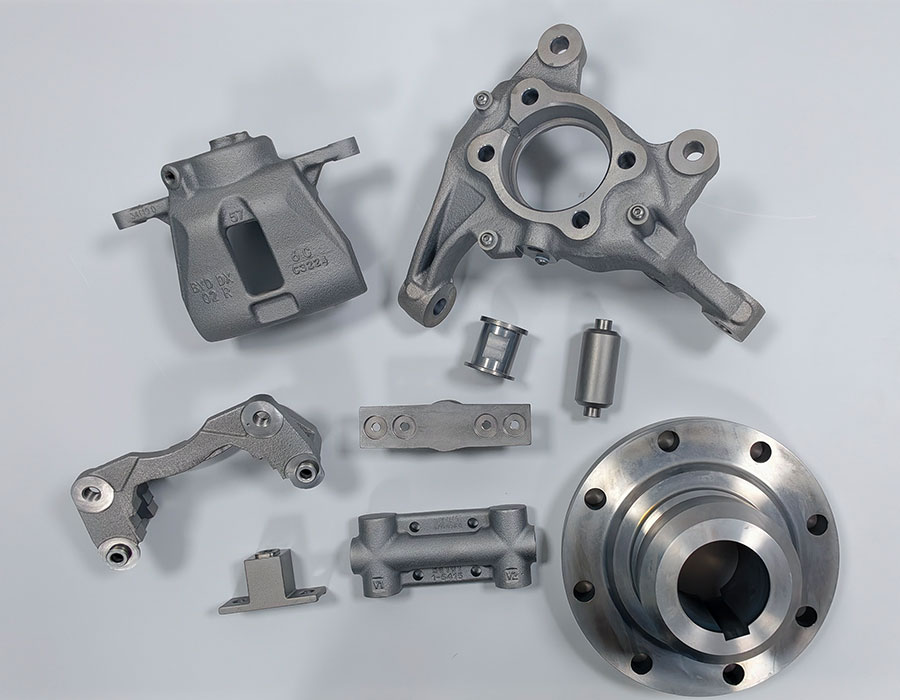
EADAmetal One-Stop Orchestration
For brake systems, brackets, housings, valve bodies, and high-reliability mechanical parts, we ensure the final part simultaneously meets: Material Specs + Machining Dimensions + Surface Performance + Critical Sizes + Assembly Reqs + Appearance + Traceability.
What is Zinc Nickel Plating?
Zinc Nickel Plating is a high-performance anti-corrosion surface treatment process that forms a protective zinc-nickel alloy layer on steel or cast iron parts via electrochemical methods.
Compared to Standard Zinc
By introducing nickel into the coating, it enhances overall corrosion resistance, heat resistance, and mechanical stability, while retaining the sacrificial anti-corrosion protection for the steel substrate.
Ideal Harsh Environments
Perfect for parts exposed to: Road salts, rain & moisture, mud/sand, outdoor environments, temperature cycling, and high salt spray industrial environments.
A Complete Plating System
High corrosion resistance is not achieved by simply "plating a layer of zinc nickel." The final NSS performance comes from the synergistic effect of the entire process system.
| Item | EADAmetal Reference Capability |
|---|---|
| Surface Treatment | Zinc Nickel Plating |
| Process System | Pre-treatment + Zn-Ni Plating + Passivation + Sealing + Drying/Curing |
| Steel NSS | Up to 1000 h+ without red rust |
| Cast Iron NSS | Up to 720 h+ without red rust |
| Main Functions | High corrosion resistance, sacrificial protection, heat resistance, mechanical durability |
| Eco-Friendly System | Matches Cr(VI)-free passivation and eco-friendly processes |
| Selective Masking | Supports protection for holes, threads, mating faces, and critical dimensions |
| Manufacturing | Casting/Forging + CNC Machining + Zn-Ni + Inspection |
| Quality System | IATF 16949 / ISO 9001 |
Actual salt spray performance is influenced by part material, casting condition, surface quality, part structure, coating thickness, and testing specs. Final performance is subject to specific technical specs and project validation.
Main Advantages
The value of Zinc-Nickel extends beyond high salt spray performance. For automotive, construction, and high-standard industrial parts, it achieves an excellent balance among corrosion protection, heat resistance, mechanical durability, and dimensional impact.
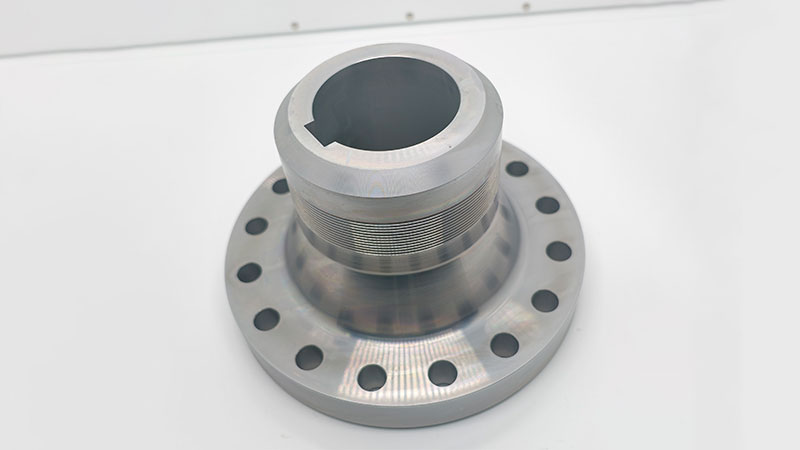
High Corrosion Res.
Steel parts up to 1000h+ NSS; Cast iron up to 720h+ NSS without red rust.
Sacrificial Protection
Coating corrodes preferentially, providing continuous protection to the steel substrate.
Wear & Scratch Res.
Better mechanical stability and resistance to assembly damage compared to standard zinc.
Heat Resistance
Superior thermal stability compared to standard zinc plating.
Low Dimension Impact
Achieves high corrosion protection with relatively limited coating thickness.
Automotive Volume
Suitable for mass production requiring high consistency, precise dimensions, and traceability.
High Corrosion Resistance: Steel vs. Cast Iron
Zn-Ni achieves higher long-term protection at thinner limits than standard zinc. However, substrate surface conditions directly impact final performance.
| Substrate | NSS Reference | Typical Applications |
|---|---|---|
| Steel Parts | 1000 h+ No Red Rust | Machined steel parts, brackets, connectors, fasteners, structures. |
| Cast Iron | 720 h+ No Red Rust | Brake system parts, brackets, valve bodies, housings, complex castings. |
Why Different Process Controls?
Steel surfaces are generally more uniform, favoring a continuous coating. Cast iron is far more complex, often containing: Graphite structures, micro-pores, casting surface variations, deep holes, and complex edges.
Therefore, cast iron Zn-Ni plating tests not just plating parameters, but pre-treatment, fixture design, current distribution, and overall system stability. EADAmetal's complete system achieves 720h+ NSS for high-standard cast iron.
Sacrificial Corrosion Protection
Zn-Ni doesn't just act as a barrier; it provides sacrificial protection. If a part suffers minor scratches or mechanical damage during transport or assembly, the alloy corrodes preferentially, delaying red rust on the steel. Ideal for chassis, brakes, construction machinery, and outdoor equipment exposed to salt, water, and mechanical impacts.
Better Wear & Scratch Resistance
While its main function is anti-corrosion (not replacing Hard Chrome/DLC for extreme wear), Zn-Ni offers superior mechanical stability and scratch resistance compared to standard zinc. This is highly valuable for parts enduring transport friction, automated assembly, bolting, vibration, and outdoor operation.
Excellent Heat Resistance
Zn-Ni has superior thermal stability. For automotive brakes, near-engine parts, powertrains, and components experiencing thermal cycling, corrosion stability after heat aging is vital. Zn-Ni excels where both High Corrosion Resistance and Temperature Cycling are required.
Eco-Friendly Zn-Ni Systems
Modern automotive parts must meet strict restricted substance regulations. Zn-Ni can utilize Hexavalent Chromium-Free (Cr(VI)-free) passivation and eco-friendly sealing systems, aligning with RoHS, REACH, ELV, and specific OEM standards based on project requirements.
Process Comparisons
Zn-Ni vs. Standard Zinc
| Comparison Item | Standard Zinc | Zinc Nickel Alloy |
|---|---|---|
| Core Purpose | Standard anti-corrosion | High-grade, long-term anti-corrosion |
| Sacrificial Protection | Yes | Yes |
| Corrosion Resistance | Medium | High |
| Heat Resistance | Average | Better |
| Scratch Resistance | Average | Better |
| High Salt Environments | Average | More Suitable |
| Typical Applications | Standard fasteners, brackets | Automotive, construction, high-standard parts |
Compared to Other Surface Treatments
| Treatment | Main Advantage | Anti-Corrosion | Best Fit Applications |
|---|---|---|---|
| Zinc-Nickel | High anti-corrosion, sacrificial, heat resistant | High | Auto chassis, brakes, construction, steel parts |
| Electroless Nickel | Uniform thickness, balances corrosion/wear | Lower | Valve bodies, precision mechanics, complex shapes |
| Hard Chrome | High hardness, high wear resistance | Medium | Valve stems, small shafts, reciprocating parts |
| Powder Coating | Thick coating, variety of appearances | High | Brackets, housings, structural parts |
Complex Parts & Critical Area Masking
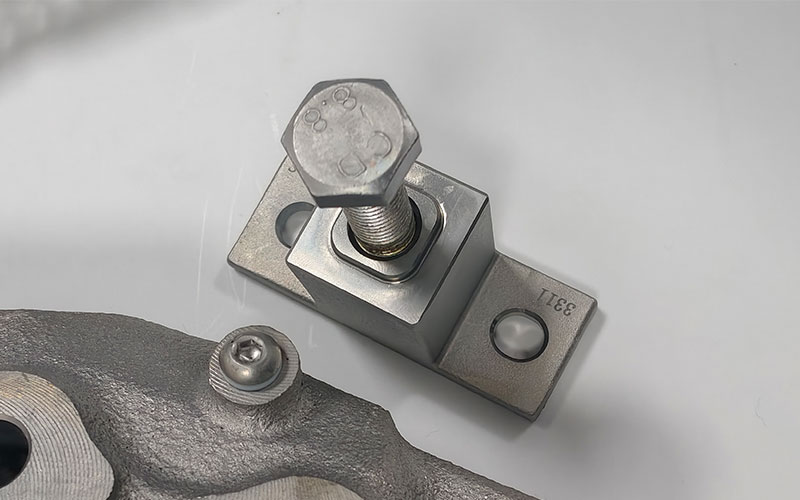
For high-standard mechanical parts, uniform plating thickness isn't always permissible everywhere. EADAmetal designs local protection and fixture solutions based on customer drawings.
-
Precision/Threaded Holes: Dedicated masking.
-
Mating Faces: Local non-plated or strict dimension control.
-
Complex Structures: Specialized fixture design.
-
Critical Dimensions: Comprehensive pre-plating evaluation.
One-Stop Finished Component Supply
Clients don't need to transfer products between foundries, machining shops, and plating plants. Provide us with drawings, materials, surface reqs, inspection standards, and volumes—we organize the entire flow.
Raw Material
Casting, forging, or specified raw blanks
CNC Machining
Turning, milling, drilling, and mechanical processing
Surface Treatment
In-house Zinc Nickel Plating capability
Critical Masking
Protecting holes, threads, and mating surfaces
Final Inspection
Dimensions, coating, appearance, NSS tests
Quality Traceability
Batch and production quality records
Why One-Stop is Crucial?
For high-salt spray/precision parts, machining and plating are deeply linked. Reserving space, protecting faces, and casting quality dictate plating success. By unified management, EADAmetal defines standards backwards from the final part requirements, ensuring automotive-grade quality control.
From "Plating Passed" to "Finished Part Passed"
For high-standard parts, merely passing salt spray test panels is insufficient; we focus on the actual final component's state. We judge: "Does this finished part meet drawing and usage requirements?"
Typical Applications
| Application Area | Typical Components | Primary Requirements |
|---|---|---|
| Auto Brake Systems | Caliper brackets, structural parts, connectors | High NSS, dimensions, consistency |
| Auto Chassis | Brackets, mounts, connections | Road salt environment, long-term anti-corrosion |
| Hydraulic Systems | Valve bodies, connectors, structural parts | Corrosion resistance, size, assembly |
| Construction & Ag. | Brackets, connectors, cast iron/steel parts | Outdoor, mud/water, corrosive environments |
From Drawing to Finished Parts
If you are looking for more than just a plating supplier, but a one-stop partner capable of Blank Manufacturing, CNC Machining, High-Standard Surface Treatment, and Final Delivery.
Provide your product drawings, materials, tolerances, NSS requirements, non-plated areas, environments, and volumes, and we will evaluate the complete manufacturing solution.
One supplier. From casting and machining to surface treatment and final inspection.