Electroless Nickel Plating
Electroless Nickel Plating
ENP Solutions for High Dimensional Precision, Complex Structures, and Functional Protection.
EADAmetal provides Electroless Nickel Plating (ENP) manufacturing and surface treatment services tailored for hydraulic systems, pneumatic systems, automotive components, industrial equipment, automation machinery, and precision mechanical parts.
The True Value of ENP:
Unlike Zinc-Nickel alloys (which aim for sacrificial corrosion protection), ENP offers Uniform Thickness + Predictable Dimensional Changes + High Adaptability to Complex Structures + Balanced Corrosion & Wear Resistance.
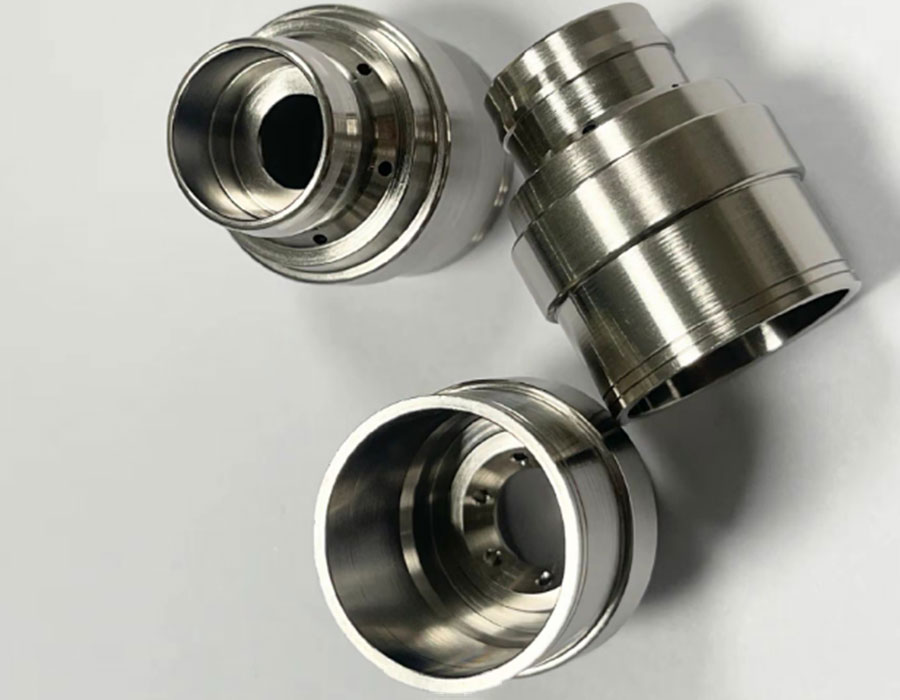
EADAmetal One-Stop Orchestration
We care not just whether the plating passes, but whether the final component meets: Thickness + Final Dimensions + Fit Tolerances + Corrosion & Wear Resistance + Assembly Requirements.
What is Electroless Nickel Plating?
It is an autocatalytic chemical reduction process that deposits a nickel alloy coating (typically Ni-P) without external electrical current. Based on phosphorus content, ENP is classified into three main types:
Low Phosphorus
Approx. 2–4% P
High hardness, wear-resistant, good electrical conductivity, and excellent solderability.
Medium Phosphorus
Approx. 5–9% P
The perfect comprehensive balance between hardness, wear resistance, corrosion resistance, and cost.
High Phosphorus
>10% P
Strong focus on high corrosion resistance, low porosity, and specialized functional protection in harsh environments.
ASTM B733 notes that physical and chemical properties change significantly with phosphorus content and subsequent heat treatments.
EADAmetal Capabilities
| Item | EADAmetal Reference Capability |
|---|---|
| Surface Treatment | Ni-P Electroless Nickel Plating |
| Core Advantages | Uniform thickness, precision dimensions, wear resistance, and functional protection |
| Complex Parts | Supports valve bodies, cavities, grooves, and complex machined components |
| Precision Dimensions | Especially suited for parts requiring strict tolerances post-surface treatment |
| High-P System NSS | Combined with proper post-protection, referencing up to approx. 96 h |
| Heat Treatment | Further hardens the coating through heat treatment per project requirements |
| Selective Masking | Supports protection for holes, threads, sealing faces, and precision mating areas |
| Quality Management | IATF 16949 / ISO 9001 |
Note: ENP salt spray performance depends on substrate, porosity, P-content, and post-protection. We do not position ENP as an ultra-high salt spray system analogous to Zinc-Nickel. NSS requirements must be validated per project.
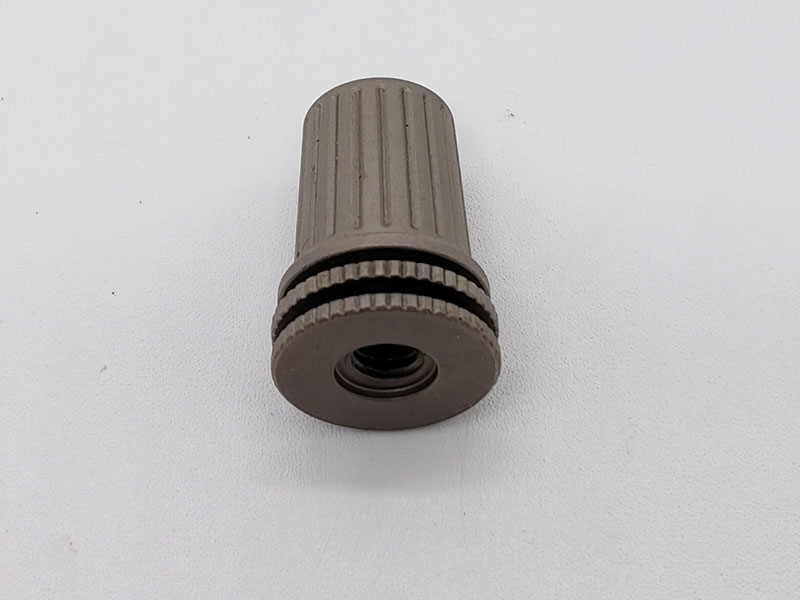
The True Advantage: Dimensional Precision
For many precision parts, the real challenge is: Can the part maintain its original dimensional precision after adding surface protection?
Traditional electroplating relies on external current, causing uneven thickness at edges, protrusions, and blind holes. ENP uses autocatalytic chemical deposition, obtaining a highly uniform coating on complex geometric surfaces, provided the solution flows freely (as noted by ASTM B733).
Ideal for: High Dimensional Accuracy + Complex Structures + Corrosion Resistance.
Why Suitable for Precision Valve Bodies?
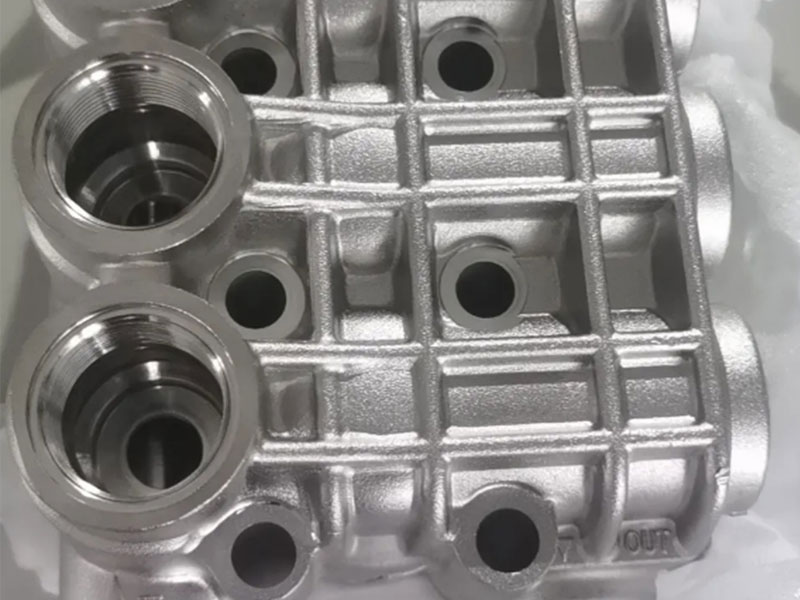
A precision hydraulic valve body might simultaneously feature:
Valve spool bores
Precision mating holes
Oil passages
Grooves & Sealing faces
Intersecting holes
Threaded holes
ENP reduces noticeable thickness variations caused by current density differences. For such parts, we design backwards: Final Dimension → ENP Thickness → Pre-Plating Size → Masking.
How Should We View ENP's Corrosion Resistance?
Zinc-Nickel Alloy
Sacrificial Protection
A typical sacrificial system. Even if locally damaged, it continues to protect the steel substrate by corroding preferentially. Excellent for extreme salt spray hours.
Electroless Nickel (ENP)
Barrier Protection
Relies on continuous coating to isolate the substrate. If pores or damage exist, protection drops. High-P ENP + post-protection offers solid NSS (e.g., ~96h), but is not meant to compete with Zinc-Nickel's extreme sacrificial hours.
Hardness Differences & Heat Treatment
Lower P content equals higher as-plated hardness. However, heat treatment induces precipitation hardening across all types.
| Type | As-Plated Hardness | Post-Heat Treatment Hardness | Primary Tendency |
|---|---|---|---|
| Low-P Ni-P | Approx. 650–750 HV | Approx. 800–1000 HV | Hardness, Wear, Conductivity |
| Medium-P Ni-P | Approx. 500–650 HV | Approx. 800–1000 HV | Balanced Performance |
| High-P Ni-P | Approx. 500–620 HV | Approx. 900–1080 HV | Corrosion Resistance |
Why Does Heat Treatment Harden ENP?
During heat treatment (typically around 400°C), the Ni-P microstructure changes, forming a strengthening phase that significantly increases hardness (reaching 850-970 Knoop).
Max Hardness ≠ Max Corrosion Resistance
Heat treatment alters the original structure. You must prioritize: Corrosion vs. Wear resistance.
How to Choose?
High Hardness / Conductive: Low-P ENP
General / Balanced: Medium-P ENP
Corrosive Environments: High-P ENP
Is Electroless Nickel Conductive?
Yes. Ni-P is a metal alloy. Lower P content equals stronger metallic nature and lower resistance. ASTM B733 notes low-P ENP is used for electrical conductivity and solderability.
| Type | Conductivity |
|---|---|
| Low-P | Good / Lower Resistance (Electrical contacts) |
| Medium-P | Moderate (Balanced properties) |
| High-P | Relatively Low (Focus on corrosion) |
Process Comparisons
ENP vs. Zinc-Nickel Alloy
| Feature | Electroless Nickel (ENP) | Zinc-Nickel Alloy |
|---|---|---|
| Core Advantage | Uniform thickness + Precision + Functional | Extreme corrosion res. + Sacrificial |
| Complex Structures | Clear Advantage | Requires strict current control |
| Typical Parts | Valve bodies, manifolds, precise cavities | Auto chassis, brackets, heavy machinery |
ENP vs. Hard Chrome
| Primary Need | Recommended Direction |
|---|---|
| Complex structure + Uniform thickness | Electroless Nickel |
| Continuous reciprocating motion + Extreme wear | Hard Chrome |
| Post-plating precision grinding needed | Hard Chrome |
ENP vs. Hard Anodizing (For Aluminum)
| Feature | Electroless Nickel | Hard Anodizing |
|---|---|---|
| Coating Nature | Ni-P Metal Layer (Conductive) | Alumina Ceramic Layer (Insulating) |
| Dimension Uniformity | Excellent | Must factor inward/outward growth |
Complex Cavities & Blind Holes
ENP has excellent uniform deposition, but it doesn't mean any infinitely deep hole gets identical plating automatically.
For deep holes, slender oil passages, and blind holes, we must engineer: Hole Diameter + Length-to-Diameter Ratio + Fluid Exchange + Bubble Evacuation + Fixture Design. We evaluate platability based on actual drawings.
One-Stop Precision Manufacturing
For precision parts, we integrate the entire process starting from customer drawings.
Raw Material
Casting, forging, or specified metals
CNC Machining
Turning, milling, drilling, boring
ENP Plating
Electroless Nickel Deposition
Selective Masking
Threads, holes, sealing faces
Heat Treatment
Per hardness/functional requirements
Post-Finishing
Lapping, polishing, fine machining
Final Inspection
Size, thickness, hardness, functionality
Delivery
Custom packaging of finished parts
What ENP Projects Fit Best?
| Project Characteristic | Suitability |
|---|---|
| Strict Dimensional Tolerances | |
| Complex Machined Structures / Valve Bodies | |
| Simultaneous Size + Corrosion/Conductivity | |
| Requires Heat Treatment Hardening | |
| Ultra-High Salt Spray Requirement (720-1000h) |
From Drawing to Finished Components
If your part requires: High dimensional precision, complex structures, uniform coating, or functional protection.
For complex parts requiring precision dimensions along with corrosion, wear, or conductive properties, EADAmetal controls everything from machining to surface treatment and final inspection, delivering complete finished parts.