Hard Anodizing
Hard Anodizing
High-Hardness, Wear-Resistant, and Anti-Corrosion Surface Treatment with One-Stop Finished Component Supply.
EADAmetal provides Hard Anodizing (Hardcoat Anodizing) services tailored for automotive components, hydraulic systems, industrial equipment, construction machinery, and precision mechanical parts.
We possess in-house hard anodizing capabilities and have established process control solutions specifically for 6-series aluminum alloys, ADC12 cast aluminum, and complex machined aluminum parts. EADAmetal is positioned as a one-stop manufacturing supplier for high-standard surface-treated components.
Our Responsibility:
Clients do not need to separately manage casting, machining, surface treatment, and inspection suppliers. EADAmetal coordinates the entire manufacturing process with the goal of delivering a complete finished component that meets drawings and end-use requirements.
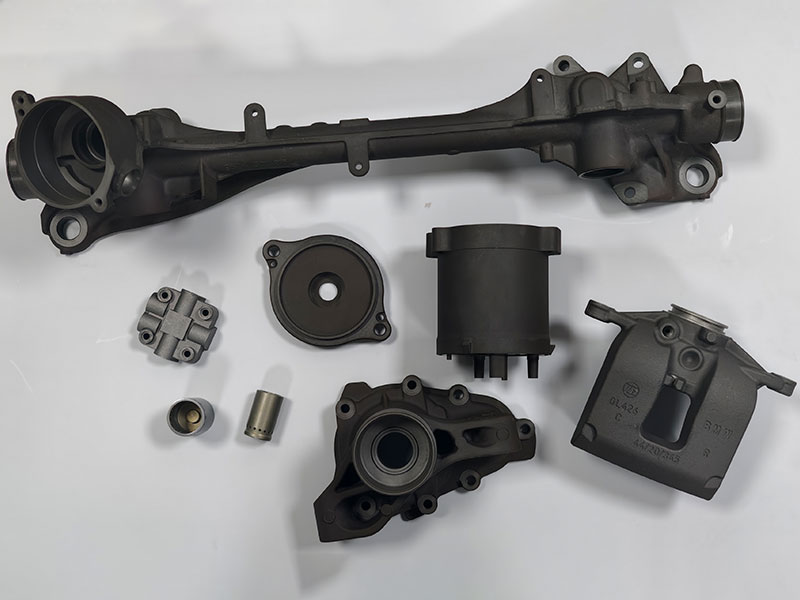
EADAmetal One-Stop Orchestration
For valve bodies, housings, hydraulic parts, actuators, and brackets, we care not just about forming the oxide film, but whether the final part simultaneously meets: Material + Machined Size + Film Performance + Mating Fit + Wear Resistance + Corrosion Resistance + Appearance + Traceability.
What is Hard Anodizing?
Hard Anodizing is a functional electrochemical surface treatment specifically for aluminum and aluminum alloys. Through an electrochemical reaction, a portion of the aluminum substrate's surface is converted into a dense aluminum oxide layer.
Unlike standard anodizing, which primarily improves color and appearance, hard anodizing focuses on functional mechanical parts. It significantly enhances:
-
Hardness & Wear Resistance
-
Corrosion Resistance
-
Electrical Insulation & Surface Durability
It is especially suitable when you want to retain the lightweight advantage of aluminum alloys while dramatically improving the wear and corrosion resistance of working surfaces.
Typical Applications Include:
-
Hydraulic & Pneumatic valve bodies
-
Aluminum housings
-
Actuator components
-
Pistons & guide parts
-
Mechanical sliding parts
-
Automotive aluminum parts
-
Precision machined aluminum
-
Industrial equipment structures
EADAmetal Capabilities
| Item | EADAmetal Reference Capability |
|---|---|
| Surface Treatment | Hard Anodizing / Hardcoat Anodizing |
| Production Mode | In-house Hard Anodizing capability |
| Primary Functions | High hardness, wear resistance, anti-corrosion, insulation |
| Surface Hardness | Up to approx. 400 HV |
| Neutral Salt Spray (NSS) | Up to approx. 720 h |
| Film Thickness | Controlled based on material, drawing, and usage requirements |
| Main Materials | 6-series aluminum, ADC12, and suitable anodizing aluminum alloys |
| Selective Masking | Supports masking for holes, threads, mating faces, and critical dimensions |
| Color | Evaluated based on material and process requirements |
| Composite Coating | Hard Anodizing + Powder Coating forms a higher-grade anti-corrosion system |
| Machining Capabilities | Integration of CNC turning, milling, drilling, and precision machining |
| Delivery Format | Finished parts complete with machining, surface treatment, and inspection |
| Quality System | IATF 16949 / ISO 9001 |
Note: The final performance of hard anodizing is closely related to the aluminum alloy grade, casting state, film thickness, sealing process, part structure, and testing standards. The data above represents EADAmetal's reference capabilities; specific project data is determined by part validation.
Main Advantages
Hard anodizing significantly improves surface performance while retaining the inherent lightweight advantage of aluminum alloys.
High Surface Hardness
Aluminum oxide film sharply increases surface hardness, reaching approx. 400 HV.
Wear Resistance
Improves durability in sliding, friction, and mechanical contact zones.
Corrosion Resistance
Creates a protective barrier, elevating environmental durability up to 720 h NSS.
Electrical Insulation
The oxide layer possesses excellent insulating properties for structural isolation.
Lightweight
Retains aluminum's weight advantages while upgrading surface mechanics.
Dimensional Control
Allows accounting for film growth during the CNC phase, perfect for precision fits.
Selective Processing
Dedicated tooling and masking protect holes, threads, and non-anodized zones.
High Surface Hardness
Standard aluminum alloys are lightweight and easy to machine, but have limited surface hardness. For parts enduring friction, sliding, or collision, untreated aluminum easily suffers scratches, galling, wear, and dimensional changes over time.
Hard anodizing forms a high-hardness aluminum oxide film (approx. 400 HV via EADAmetal's process), making it perfect for parts demanding: Lightweight + Surface Hardness + Wear Resistance.
Electrical Insulation
The hard anodized layer is primarily composed of aluminum oxide, which is an electrical insulator. This provides certain parts with electrical isolation capabilities, making it useful for electrical equipment housings, control system parts, and electronic structural components.
Excellent Wear Resistance
The hard oxide layer reduces the chance of the substrate being directly subjected to friction and mechanical contact.
| Working Condition | Role of Hard Anodizing |
|---|---|
| Sliding Fits | Reduces direct wear on the aluminum substrate |
| Reciprocating Motion | Increases durability of the working surface |
| Assembly Contact | Enhances anti-galling ability |
| Guide Structures | Improves long-term stability of guide surfaces |
| Mechanical Housings | Increases durability of internal and external surfaces |
| Frequent Disassembly | Lowers mechanical damage in specific zones |
High Corrosion Resistance (Up to 720h NSS)
Aluminum has natural oxide protection, but it's too thin for long-term industrial durability. Hard anodizing creates a thicker, more stable layer. EADAmetal achieves approx. 720 hours NSS based on proper materials and structures, making it highly applicable for automotive parts, outdoor equipment, hydraulic systems, and humid environments.
Hard Anodizing Affects Part Dimensions
This is a critical issue for precision aluminum parts.
Unlike standard painting, the hard anodic film does not merely "cover" the original surface. It grows both outward from the original surface and inward into the substrate during the process.
Therefore, for precision holes, bearing bores, valve spool holes, mating ODs, sealing areas, and threads, you cannot wait until machining is entirely finished to consider hard anodizing.
Controlling Anodizing from the Machining Phase
| Item | Issues to Consider in CNC Phase |
|---|---|
| Bore Diameter | Is pre-allocation for oxide film size necessary? |
| Outer Diameter | Will final size post-anodizing still meet tolerances? |
| Threads | Are they permitted to be anodized? |
| Sealing Faces | Do they require masking/protection? |
| Bearing Fits | Is oxide film formation allowed here? |
| Guide Surfaces | Does thickness and surface state meet usage needs? |
| Datum Faces | Must original dimensions be retained? |
Complex Parts & Critical Area Protection
Many aluminum parts do not require hard anodizing on all surfaces. EADAmetal implements corresponding masking and shielding solutions based on drawing requirements.
Precision Holes
Masking / Custom protection
Threaded Holes
Dedicated plug protection
External Threads
Protected based on size reqs
Bearing Fits
Local non-anodizing
Sealing Faces
Custom masking
Conductive Areas
Retain metal surface
Complex/Special Zones
Custom fixtures and tooling developed per drawing
6-Series Aluminum Hard Anodizing
6-series aluminum is highly common for machined industrial structural parts, offering good machinability, strength-to-weight ratio, and surface treatment adaptability. EADAmetal formulates hard anodizing plans based on final size, thickness, wear, and corrosion requirements.
Typical applications: Precision valve bodies, hydraulic parts, industrial housings, mounting brackets, guides, and actuators.
ADC12 Cast Aluminum Hard Anodizing
Compared to wrought alloys, ADC12 is a typical die-cast aluminum. Because it contains a high percentage of silicon and other alloys, its anodizing is harder to control. Material composition, casting structure, porosity, and casting surface state all affect film formation, appearance, uniformity, and local performance.
Recommendation: ADC12 requires high focus on Casting Quality + Pre-treatment + Machined Zones + Anodizing Parameters. We recommend process validation on actual parts rather than standard test panels.
Process Comparisons
Hard Anodizing vs. Standard Anodizing
| Comparison Item | Standard Anodizing | Hard Anodizing |
|---|---|---|
| Primary Purpose | Corrosion res., decoration, coloring | Wear, hardness, functional protection |
| Film Layer | Typically thinner | Typically thicker |
| Surface Hardness | High | Higher (EADAmetal up to ~400 HV) |
| Wear Resistance | Average | High |
| Corrosion Resistance | Good | High (EADAmetal up to ~720h NSS) |
| Appearance Options | Richer colors available | Functionality prioritized |
| Dimensional Impact | Relatively small | Must calculate film thickness impact |
| Typical Apps | Consumer goods, decorative parts | Valves, hydraulic parts, machinery |
Compared to Other Surface Treatments
| Process | Substrate | Main Advantage | Wear | Corrosion | Best Fit Apps |
|---|---|---|---|---|---|
| Hard Anodizing | Aluminum | High hardness, wear, anti-corrosion, insulation | High | High | Alum. valves, housings, hydraulic parts |
| Std. Anodizing | Aluminum | Anti-corrosion, decoration, coloring | Med. | Good | Appearance parts, general industry |
| Electroless Nickel | Alum/Steel | Uniformity, corrosion/wear resistance | High | High | Precision valves, complex parts |
| Hard Chrome | Steel/Metal | Extreme wear res., grindable | Very High | Med. | Small shafts, valve stems, pistons |
| Powder Coating | Multi-metal | High anti-corrosion, rich colors, thick layer | Med. | High | Housings, brackets, structures |
| Micro-Arc Oxidation | Alum/Mag. | High-hardness ceramic layer, special perf. | Very High | High | Special high-perf Al/Mg parts |
There is no absolute best process. Selection depends on Material + Friction State + Corrosion Environment + Dimensions + Appearance + Electrical + Cost.
Higher Level Composite Protection (NSS 1200h+)
For extreme corrosive environments where hard anodizing alone is insufficient, we apply a composite system: Aluminum Substrate → Hard Anodizing → Powder Coating. The hard oxide layer strengthens the substrate surface, and the powder coating forms an extra environmental barrier.
-
Hard Anodizing: Hardness 400 HV / NSS ~720h
-
Powder Coating: Environmental isolation + Appearance
-
Composite System: High Anti-Corrosion Protection reaching NSS 1200h+ (verified per project).
One-Stop Aluminum Component Manufacturing
This is the key difference between EADAmetal and simple anodizing shops. Provide us with product drawings, materials, surface reqs, standards, and quantities, and we unify the entire production flow.
Blank / Casting
Aluminum casting, die-casting, or raw materials
Precision CNC
Turning, milling, drilling, machining
Surface Treatment
In-house Hard Anodizing capabilities
Selective Masking
Holes, threads, mating faces, conductive zones
Final Inspection
Dimensions, film layer, appearance, performance
Quality Traceability
Batch and production quality records
Why is One-Stop Better Here?
Hard anodizing and CNC dimensions are strictly linked. If managed by separate vendors, issues arise: unallocated film sizes, out-of-tolerance fits post-anodizing, unmasked threads causing assembly failure, or blurred responsibility boundaries. We determine CNC plans backward from the final part reqs, mitigating transition risks.
Typical Applications
| Application Area | Typical Components | Primary Requirements |
|---|---|---|
| Hydraulic Systems | Valve bodies, housings, guides, structural parts | Wear, dimensions, anti-corrosion |
| Pneumatic Systems | Valve bodies, actuator parts | Surface hardness, sliding performance |
| Auto Components | Aluminum housings, brackets, functional parts | Lightweight, anti-corrosion, batch consistency |
| Industrial Equipment | Machined housings, mounting parts | Wear resistance, long-term stability |
| Construction Mach. | Aluminum functional parts | Anti-corrosion, mechanical durability |
| Precision Machinery | 6-series aluminum precision parts | Dimensions, surface performance |
| ADC12 Die Castings | Housings, valve bodies, structural parts | Casting surface & anti-corrosion control |
Quality & Process Control (IATF 16949 / ISO 9001)
| Control Item | Primary Purpose |
|---|---|
| Raw Material / Castings | Confirm substrate and blank state |
| CNC Dimensions | Ensure pre-anodizing machining sizes and critical tolerances |
| Oxide Film Thickness | Meet surface treatment technical reqs |
| Surface Hardness | Verify functional hard anodizing performance |
| Final Dimensions | Confirm film formation satisfies drawing sizes |
| Appearance | Control burns, color differences, and abnormal surfaces |
| Non-Oxidized Zones | Confirm masking location accuracy |
| Threads & Precision Holes | Guarantee assembly functionality |
| Neutral Salt Spray (NSS) | Verify anti-corrosion performance |
From Drawing to Finished Aluminum Parts
If your aluminum part requires: Hard Anodizing, High Hardness, Wear/Corrosion Resistance, Precision Dimension Control, Masking, 6-Series Machining, ADC12 Processing, or One-Stop Supply.
Provide your product drawings and technical requirements. We will evaluate the complete manufacturing plan based on material grade, blank process, part structure, tolerances, film reqs, hardness/NSS reqs, non-anodized zones, usage environment, and volumes.
One supplier. From aluminum casting and precision machining to hard anodizing and final inspection.