Stainless Steel Passivation
Stainless Steel Passivation
Cleaning, Passivation, and Finished Part Manufacturing Solutions for Precision Stainless Steel Components.
For precision stainless steel parts, the primary value of passivation is not to build a thick protective coating. Instead, it utilizes controlled cleaning and chemical treatments to remove free iron and other detrimental contaminants left on the surface after machining, thereby promoting the formation of a clean, stable passive oxide film.
-
SAE AMS2700G defines the main objective of passivation as the removal of free iron or other less noble contaminants from the surface of corrosion-resistant steels.
-
ASTM A967/A967M-25 specifies various chemical passivation treatments and verification test methods for stainless steel parts.
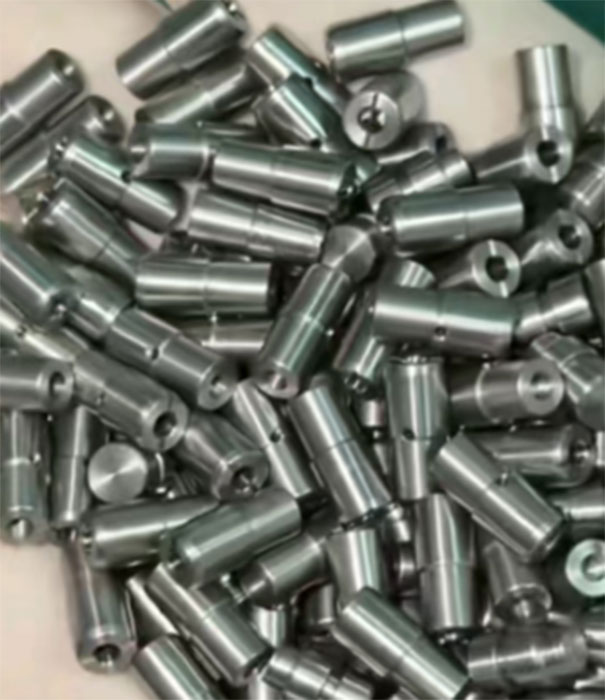
EADAMetal is positioned as a one-stop manufacturing supplier for high-standard surface-treated components. Clients can directly provide part drawings, and we handle the entire process:
Raw Materials
CNC Machining
Precision Cleaning
SS Passivation
Final Inspection
Custom Packaging
Delivery
What is Stainless Steel Passivation?
The inherent corrosion resistance of stainless steel relies heavily on a chromium-rich passive film formed on its surface. However, during turning, milling, drilling, grinding, polishing, and material handling, the surface can become contaminated by:
-
Free iron particles & Tool wear residues
-
Iron-bearing abrasive media & Machining oils
-
Stray metal dust and environmental debris
These contaminants disrupt the original surface state of stainless steel and act as initiation sites for localized corrosion.
Why Passivate Machined Parts?
"Since stainless steel is inherently rust-resistant, why passivate it after machining?"
The issue originates during the machining process itself. If the equipment previously processed carbon steel, micro-particles of free iron can embed into the stainless steel surface.
These iron particles lack the corrosion resistance of stainless steel. Consequently, when rusting occurs, it is rarely the stainless steel matrix failing first, but rather the embedded surface iron initiating localized pitting and rusting.
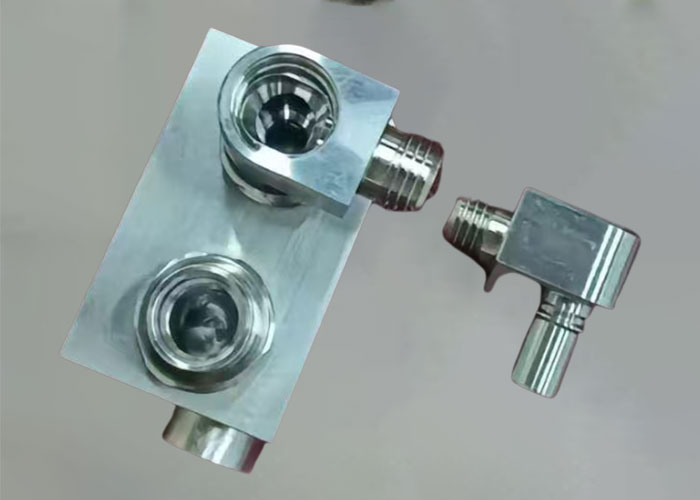
Exceptional Friendliness to Precision Tolerances
Unlike plating processes that build up physical material on surfaces, passivation is non-dimensional.
Electroplating / Anodizing
Adds measurable thickness or transforms the surface with significant dimensional growth.
Stainless Steel Passivation
Removes surface impurities and promotes passive film formation without building up thickness.
Requires no special machining allowances or dimensional offsets for:
Precision shafts and spools | Valve stems and plungers | Precision dowel pins | Interlocking bores and threads | Ground fitting faces
Nitric Acid vs. Citric Acid Passivation
ASTM A967/A967M-25 outlines several methods for chemical passivation, including nitric acid immersion, citric acid immersion, and electrochemical treatments:
-
Nitric Acid Passivation:
The traditional, widely accepted industry standard suitable for a broad spectrum of stainless steel alloys. -
Citric Acid Passivation:
An environmentally friendly, modern alternative increasingly specified across automotive and medical industries. -
Electrochemical Treatment:
Specialized chemical-electric passivation specified under ASTM A967/A967M-25.
Process choice depends on: Stainless Steel Grade + Heat Treatment + Part Geometry + Specifications + End-Use Environment.
Passivation Verification & Testing Methods
Proper quality assurance requires validating that surface contaminants have been effectively neutralized. ASTM A967/A967M-25 defines several qualitative verification tests:
-
Water Immersion Test
-
High Humidity Test
-
Salt Spray Test (NSS)
-
Damp Cloth Test
-
Copper Sulfate Test
-
Ferricyanide-Nitric Acid Test
-
Boiling Water Test
Note on Salt Spray Hours: Passivation testing evaluates surface purity and free iron removal, whereas electroplating salt spray tests measure sacrificial coating degradation rates.
From Drawing to Finished Component
By unifying Machining + Cleaning + Passivation + Inspection + Packaging under EADAMetal's quality control system, we eliminate cross-contamination risks and multi-vendor logistics overhead.
-
2D Drawings / 3D Models
-
Material & Heat Treatment
-
Tolerances & Roughness
-
Passivation Standard
-
Validation Requirements
-
Order Quantities
Ready to evaluate?
Clean surface. Precision dimensions. Reliable performance.
Submit Project Details