Hard Chrome Plating
Hard Chrome Plating
High-Hardness, High-Wear Functional Surface Treatment.
EADAmetal is positioned as a one-stop manufacturing supplier for high-standard surface-treated components. Relying on our in-house surface treatment capabilities alongside mature machining, precision grinding, and quality inspection resources, we coordinate critical processes—from machining and hard chrome plating to post-plating precision processing and final inspection—based entirely on part drawings and end-use requirements.
For valve stems, plungers, small shafts, pins, and other functional parts with high demands on surface performance, dimensional accuracy, and consistency, our advantage is not just completing a single hard chrome plating step. We comprehensively evaluate base materials, machining allowances, coating thickness, distribution, final dimensions, and surface quality to control the entire manufacturing process.
This approach gives EADAmetal superior process integration and quality control capabilities, providing clients with a one-stop supply solution from drawings to finished components.
What is Hard Chrome Plating?
Hard Chrome Plating is a functional surface treatment process that deposits a chromium layer on metal parts via electrochemical methods.
Unlike decorative chrome, hard chrome is not primarily for appearance, but rather to improve the working surface's:
Surface Hardness & Wear Resistance
Anti-Galling Ability
Service Life & Sliding/Reciprocating Performance
Hard chrome plating is typically applied to components subjected to friction, sliding, reciprocating motion, or long-term mechanical wear.
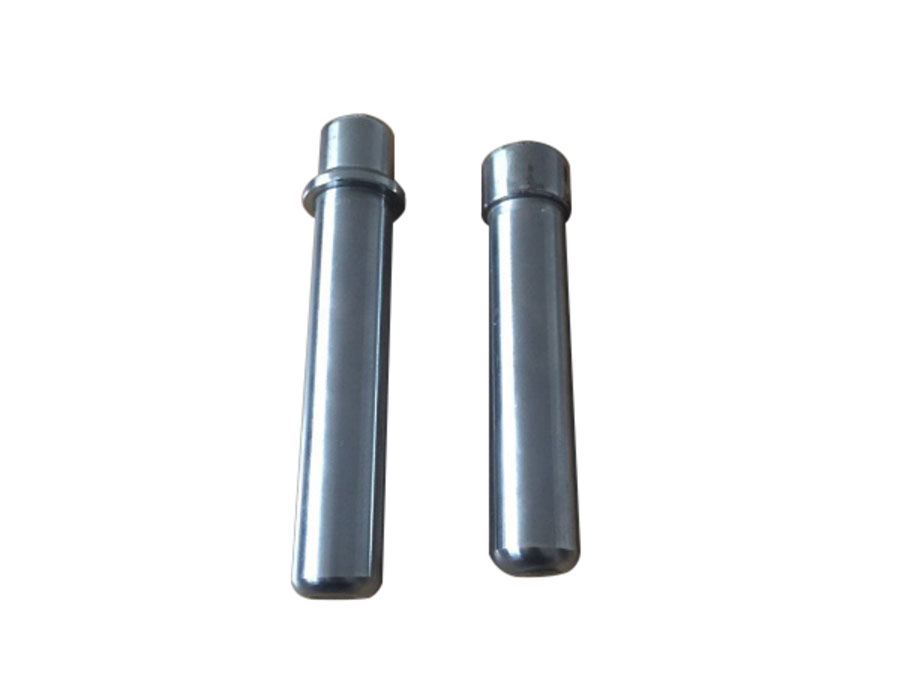
Typical applications include: precision valve stems, valve plungers, piston rods, small precision shafts, guide pins, dowel pins, hydraulic parts, pneumatic components, solenoid valve parts, and industrial actuator components.
The Precision Dimensional Chain
For high-precision mechanical parts, hard chrome coating not only affects surface performance but directly changes part dimensions. Therefore, genuine precision hard chrome plating must simultaneously consider:
EADAmetal Hard Chrome Capabilities
EADAmetal possesses an in-house functional hard chrome plating production line. We comprehensively evaluate coating areas, thicknesses, non-plated zones, post-plating grinding allowances, and final dimensions based on part drawings and usage conditions.
| Item | EADAmetal Reference Capability |
|---|---|
| Surface Treatment Process | Functional Hard Chrome Plating |
| Production Mode | In-house hard chrome plating production line |
| Coating Hardness | Up to 800 HV |
| Coating Thickness | Controlled based on drawings, wear requirements, and subsequent grinding allowances |
| Plating Coverage | Supports overall plating and selective/local plating |
| Non-Plated Area Protection | Supports protection for threads, holes, mating surfaces, and critical dimensional areas |
| Post-Plating Processing | Supports precision grinding after hard chrome plating |
| Dimension Control | Can combine pre-plating size, coating thickness, and grinding allowance to control final dimensions |
| Salt Spray / Corrosion Resistance | Project validation available based on base material, coating thickness, and technical requirements |
| Applicable Parts | Valve stems, plungers, small shafts, pins, guide components, and precision reciprocating parts |
| Production Batch | Supports prototypes, small-to-medium batches, and continuous mass production |
| Quality Management | IATF 16949 / ISO 9001 |
*Note: The core function of hard chrome is to improve surface hardness and wear resistance. Its salt spray and corrosion resistance are influenced by factors such as base material, coating thickness, micro-crack structure, pretreatment quality, and part geometry. For projects with specific salt spray requirements, we formulate processes and conduct sample validations based on drawings and specifications.
Main Performance Features of Hard Chrome
High Surface Hardness
Functional hard chrome has high surface hardness. EADAmetal's process achieves approx. 800 HV, enhancing the working area's ability to resist friction, galling, and mechanical wear, making it suitable for long-term moving and high-frequency friction parts.
Excellent Wear Resistance
Wear resistance is its most critical property. For valve stems and shafts continuously interacting with seals and bushings, the high-hardness surface reduces substrate wear under proper lubrication, extending part life.
Coating Thickness Control
Thicker isn't always better. Thickness depends on base material, load, tolerances, and whether post-grinding is needed. EADAmetal precisely controls the dimensional chain: Final Size → Post-Grinding Allowance → Chrome Thickness → Pre-Plating Size.
Salt Spray & Corrosion
While hard chrome offers some corrosion resistance, its primary goal is wear resistance. Corrosion performance depends on thickness, porosity, and micro-cracks. We evaluate specific NSS requirements or suggest composite solutions if needed.
Selective Hard Chrome Plating
Many precision parts only need hard chrome on working/sliding surfaces. EADAmetal provides selective plating and masking for non-plated areas, protecting threads, holes, and critical mating surfaces to maintain original dimensions.
Chrome + Precision Grinding
For parts with strict tolerances (OD, roundness, runout), plating alone is insufficient. We provide: Precision Machining → Hard Chrome Plating → Precision Grinding → Final Inspection. This yields stable final dimensions and optimal working surfaces.
Why is an In-House Hard Chrome Line Important?
For ordinary parts, hard chrome might just be an independent surface treatment step. But for precision mechanical parts, hard chrome is actually part of the entire dimensional chain.
If handled by different vendors:
Machining may not leave enough space for the coating.
Over-plating leads to excessive grinding allowances.
Under-plating leaves insufficient effective coating after precision grinding.
Coating is too thick at the edges.
Deviations in final dimensions, with quality responsibilities hard to define.
EADAmetal's In-House Line Coordinates:
Machining Dimensions
Coating Thickness & Distribution
Selective Masking
Post-Plating Grinding
Final Dimensions
We focus on whether the final part meets drawing and usage requirements, rather than just independently finishing a plating process.
Typical Component Applications
Precision Valve Stems
Suitable for hydraulic, pneumatic, solenoid, and industrial control valves. Hard chrome improves working surface wear resistance and is combined with post-plating grinding to control final fit dimensions.
Valve Plungers
Used in valves and actuators requiring precise sliding and reciprocating motion. We heavily focus on controlling chrome thickness, final outer diameter, and surface condition.
Precision Small Shafts
Suitable for small-diameter shafts requiring precision fits with bushings, seals, bearings, or other mating mechanical components.
Pilot Pins & Precision Pins
For pin components with wear requirements on specific local working surfaces, local hard chrome treatment can be applied according to drawings.
Hydraulic & Pneumatic Components
Includes plungers, guide rods, valve stems, pistons, and other mechanical parts with moving and wearing surfaces.
Applicable Materials
EADAmetal formulates corresponding pretreatment and hard chrome plating plans based on different base materials.
Carbon Steel
Alloy Steel
Stainless Steel
Copper & Copper Alloys
Other engineering metals suitable for functional hard chrome
For special materials, specific heat treatments, or special operating environments, we conduct individual process evaluations based on drawings.
Quality & Inspection
For precision hard chrome parts, we focus not only on the coating itself but also on dimensional changes before and after plating, as well as final part performance. Based on drawings and tech specs, we control/inspect:
Coating Thickness & Hardness
Final Dimensions & Outer Diameter
Roundness & Runout
Surface Roughness & Appearance
Plated / Non-Plated Areas
Critical Dimensions
Salt Spray & Corrosion Resistance
EADAmetal operates under IATF 16949 and ISO 9001 quality management systems, ensuring production and process traceability according to customer requirements.
Start From the Drawing
If your part requires: Wear resistance, High surface hardness, Reciprocating motion, Sliding fits, Precision outer diameters, Selective hard chrome plating, Post-plating precision grinding, or Strict dimensional control.
Welcome to send your part drawings to EADAmetal. We will evaluate the suitable manufacturing and plating process plan based on: material, final dimensions & tolerances, plated/non-plated zones, thickness, usage environment, post-processing needs, and production volume.
From machining to hard chrome plating and final grinding, we focus on the finished component — not just the coating.
Comparison with Other Wear-Resistant Surface Treatments
Hard chrome is not the only surface engineering solution. Depending on material, precision, wear type, corrosion environment, temp, and cost, alternatives like Laser Cladding, HVOF, Electroless Nickel, Nitriding, and PVD/DLC can be used. There is no absolute superiority; it depends on actual operating conditions. For the precision valve stems, plungers, and shafts we focus on, we prioritize coating thickness, final dimension, friction, and precision grinding before finalizing a process.
| Process | Key Characteristics | Wear Resistance | Corrosion Resistance | Dimension Repair & Finishing | Thermal Impact | Best Fit Applications |
|---|---|---|---|---|---|---|
| Hard Chrome | Electrochemical deposition forming high-hardness chrome layer | High | Medium (depends on thickness/structure) | Good repairability. Perfect for grinding to final size. | Low | Precision valve stems, plungers, small shafts, reciprocating parts. |
| Laser Cladding | Metallurgical bond via laser melting alloy materials | High to Very High | High (depends on alloy) | Very strong repair capability. Requires machining/grinding. | Localized thermal impact | Heavy-wear parts, large shafts, hydraulic rods, high-value component repair. |
| HVOF | High-velocity spray of dense coatings (e.g., WC-Co) | Very High | High (depends on coating system) | Good repairability. Usually requires precision grinding. | Lower | Aviation landing gear, large hydraulic rods, extreme wear environments. |
| Electroless Nickel | Autocatalytic chemical deposition (Ni-P) without external current | Medium to High | High | Medium. Can be polished or fine-machined. | Low | Complex structures, valve bodies, precision machinery requiring uniform thickness. |
| Nitriding | Nitrogen diffuses into substrate forming a hardened layer | High | Depends on material/process | Basically cannot be used for dimensional repair. | Heat treatment involved, minor dimensional change | Gears, shafts, molds, and steel parts suitable for nitriding. |
| PVD / DLC | Vacuum deposition of ultra-thin, high-hardness, low-friction films | Very High | Depends on system | Not for dimensional repair. Base must be at final size. | Lower | Ultra-precision sliding parts, tooling, low-friction mechanisms. |
Hard Chrome vs. Laser Cladding
Laser cladding utilizes a high-energy laser to melt metal powder/wire, forming a metallurgical bond. It is highly suitable for repairing high-value parts and applying thick wear-resistant layers. Hard chrome is an electrochemical process that does not melt the substrate, resulting in less thermal impact.
Core difference: Hard chrome leans towards precision dimensions + post-plating grinding. Laser cladding leans towards thick alloy layers + part repair + high-load surfaces (though advanced EHLA is blurring this line).
Hard Chrome vs. HVOF
HVOF (High Velocity Oxygen Fuel) sprays highly wear-resistant materials like WC-Co, performing excellently in extreme wear. It is better suited for large shafts, aviation landing gears, and heavy-duty wear surfaces. However, for mass-produced small-diameter precision shafts, valve stems, and plungers, hard chrome's dimensional control, selective plating, and fine grinding applicability remain highly competitive.
Hard Chrome vs. Electroless Nickel
Electroless Nickel (Ni-P) offers excellent corrosion and wear resistance, and due to its autocatalytic nature, provides highly uniform thickness on complex geometries, deep blind holes, or aluminum parts. However, for parts undergoing long-term reciprocating sliding that require a thicker working layer and strict final dimensions achieved via grinding, hard chrome is usually more targeted.
Hard Chrome vs. Nitriding
Nitriding does not add a traditional "coating layer." It diffuses nitrogen into the steel surface to form a hardened layer, excellent for gears and molds. Crucially, nitriding cannot be used to restore dimensions by adding significant material. Nitriding reinforces the substrate surface, while hard chrome builds a new wear-resistant working surface.
Hard Chrome vs. PVD / DLC
PVD and DLC are ultra-thin films providing extreme hardness and very low friction. Because they are extremely thin, they cannot repair dimensions. If a part is already at its final size, PVD/DLC is ideal. If the manufacturing logic requires adding material and then precision grinding down to the final size, hard chrome is more suitable.
How to Choose the Right Wear-Resistant Treatment?
We don't just choose based on "which coating is the hardest." The actual working conditions of the entire component must be evaluated.
| If your component's primary requirement is... | Strongly Consider |
|---|---|
| Precision shafts, valve stems, plungers requiring post-grinding for final size control | Hard Chrome Plating |
| Large high-value part repair, requiring thick wear-resistant alloy layers | Laser Cladding |
| Extreme wear, large shafts, and high-performance wear surfaces | HVOF |
| Complex structures emphasizing uniform coating & corrosion resistance | Electroless Nickel |
| Steel body surface hardening without adding obvious coating thickness | Nitriding |
| Ultra-thin, high-hardness, low-friction precision surfaces | PVD / DLC |
There is no "best coating" for all parts, only the most suitable engineering solution for specific conditions.
EADAmetal selects the appropriate process based on part material, fit dimensions, motion type, wear conditions, and post-machining needs. For the precision valve stems, plungers, and reciprocating parts we focus on, our core manufacturing strength lies in our In-House Hard Chrome Line + Post-Plating Precision Grinding + Final Dimension Control.