Aerospace Industry
MISSION-CRITICAL RELIABILITY
Aerospace Surface Treatment Solutions
Precision metal finishing and electroplating for high-performance aviation and defense components.
Aerospace Industry Overview
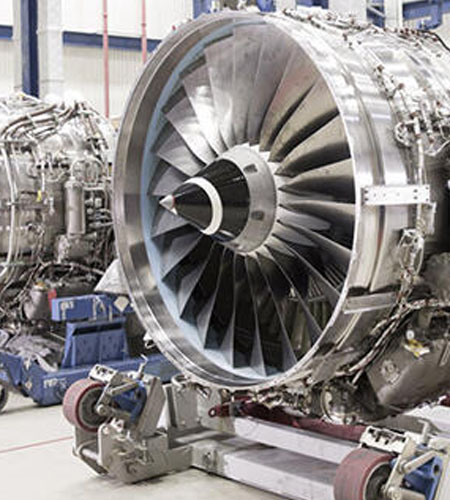
In aerospace engineering, there is zero margin for error. Components must withstand extreme thermal cycling, high-altitude radiation, and intense mechanical stress while maintaining structural integrity. Eada Metal provides advanced surface treatments defined by precision and safety. Our aerospace solutions focus on reducing weight through specialized coatings, preventing fatigue failure, and ensuring that every part—from flight control actuators to cockpit instrumentation—meets the rigorous AS9100 and Nadcap-aligned quality expectations.
Defining Technical Solutions
Lightweight Protection
Anodizing (Type II & Type III)
Anodizing is an electrochemical process that converts the aluminum surface into a decorative, durable, corrosion-resistant, anodic oxide finish. Type III (Hardcoat) Anodizing is specifically defined in aerospace for its extreme wear resistance and ability to create a non-conductive, ceramic-like surface on aluminum components, making it essential for landing gear parts and hydraulic housings.
Precision Uniformity
Electroless Nickel (ENP)
In aerospace, Electroless Nickel is defined by its ability to provide a uniform, hard, and corrosion-resistant coating on complex parts without the need for electrical current. This is critical for fuel system components and internal engine valves where "throwing power" (coating internal recesses) is vital for protecting against high-temperature oxidation and chemical erosion.
Surface Passivity
Stainless Steel Passivation
Passivation is a non-electrolytic process that removes free iron from the surface of stainless steel using a mild oxidant (nitric or citric acid). For aerospace fasteners and sensors, this process is defined by the enhancement of the protective "passive" chromium-oxide layer, ensuring that critical structural parts do not undergo localized pitting or crevice corrosion in flight.
Thermal Control
Gold & Silver Plating
Precious metal plating in aerospace is defined by the need for exceptional electrical conductivity and thermal reflectivity. Gold plating is utilized on satellite components and high-frequency connectors to prevent oxidation in space environments, while silver plating is used on engine bolts to provide anti-galling properties at high temperatures.
Critical Safety Protocols
Hydrogen Embrittlement Relief (Post-Plate Baking)
For aerospace-grade high-strength steels, hydrogen embrittlement is a catastrophic risk. Eada Metal adheres to strict AMS standards for de-embrittlement baking. This thermal process is defined by strict time-temperature parameters to ensure that hydrogen introduced during plating is removed, preventing the sudden, brittle failure of landing gear bolts and engine mounts.
Safety Focus: Failure to perform HER on 180 KSI+ steel is the leading cause of structural failure in aviation fasteners.
Aerospace Quality Verification
| Requirement | Standardization | Aerospace Objective |
|---|---|---|
| Corrosion Resistance | ASTM B117 / AMS 2700 | Verification of performance in high-altitude atmospheric humidity. |
| Coating Weight/Thickness | ASTM B568 (XRF) | Ensuring weight limits and aerodynamic tolerances are met. |
| Surface Hardness | ASTM E384 | Validating wear-resistance for flight control actuators. |
| Adhesion/Ductility | ASTM B571 | Ensuring zero delamination during airframe flexion. |