What is CNC Machine?
What is CNC?
CNC, short for Computer Numerical Control, is an advanced manufacturing technology that uses computer programs to control the movement and operation of machine tools. It replaces manual operation with pre-programmed numerical instructions, enabling precise, automated, and consistent processing of workpieces. Unlike traditional manual machine tools that rely on human operators to adjust cutting tools and workpiece positions, CNC systems interpret digital codes (G-codes and M-codes) to control spindle speed, feed rate, tool path, and other key processing parameters, ensuring high-precision production.
The core components of a CNC system include a computer control unit (MCU), input/output devices, servo drive system, and the machine tool itself. The control unit processes the pre-written program, sends signals to the servo system, and drives the machine tool’s moving parts (such as slides, spindles, and tool changers) to complete the processing task. CNC technology has revolutionized modern manufacturing, reducing human error, improving production efficiency, and enabling complex part processing that is difficult to achieve manually.
Features of CNC Machinery
CNC machinery stands out from traditional manual and semi-automatic machine tools due to its unique technical features, which make it widely used in high-precision, high-efficiency, and mass production scenarios.
High Processing Precision
CNC machinery achieves extremely high processing accuracy, with positioning accuracy and repeatability reaching the micron level (usually ±0.001–±0.01 mm). This is attributed to the high-precision servo drive system, rigid machine structure, and computer-controlled tool paths, which eliminate human operation errors and ensure consistent processing quality for each workpiece. It is particularly suitable for processing precision parts in aerospace, automotive, and electronics industries.
High Production Efficiency
CNC machinery significantly improves production efficiency compared to traditional machine tools. It can realize continuous processing without frequent manual intervention, reduce auxiliary time (such as tool change, workpiece clamping, and measurement), and achieve high-speed cutting (spindle speed and feed rate are much higher than manual machines). For batch production, the program can be reused after one-time programming, further reducing setup time and improving production throughput.
Strong Flexibility and Adaptability
CNC machinery has strong processing flexibility, which means it can quickly switch between different processing tasks by modifying the program, without the need to replace or adjust a large number of mechanical fixtures. This is especially advantageous for small-batch, multi-variety production, as it shortens the production cycle and reduces production costs. It can process complex-shaped parts (such as curved surfaces, irregular contours) that are difficult or impossible to process with traditional machine tools.
Automated Operation
CNC machinery realizes automated processing from workpiece clamping, tool change, cutting, to measurement (with optional automatic measurement systems). It can operate continuously for a long time (even unmanned operation in some cases), reducing labor intensity of operators and avoiding human errors caused by fatigue. The integration of automatic tool changers (ATC) and automatic workpiece changers (AWC) further enhances automation and production continuity.
Good Stability and Reliability
CNC machinery adopts high-quality components (such as precision ball screws, linear guides, and high-performance servo motors) and advanced control systems, which have excellent stability and reliability. The processing process is stable, and the rejection rate is low, ensuring long-term stable operation in industrial production. Additionally, most CNC systems are equipped with fault diagnosis functions, which can quickly identify and prompt faults, reducing maintenance time.
Easy to Realize Integration and Networking
Modern CNC machinery supports data communication and networking, which can be connected to computer-aided design (CAD) and computer-aided manufacturing (CAM) systems to realize integrated production from design to processing. It can also be integrated into flexible manufacturing systems (FMS) and smart factories, realizing information sharing, production scheduling, and remote monitoring, which is an important part of Industry 4.0.
Types of CNC Machine
CNC machines are classified into different types according to their processing methods, structures, and application scenarios. The most common types include the following categories, each with unique functions and applicable fields.
CNC Milling Machine
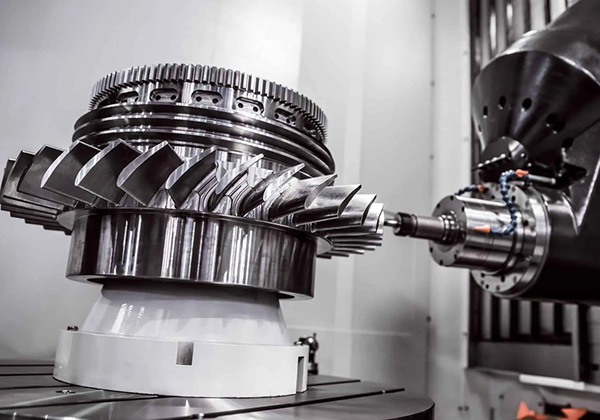
CNC milling machines are one of the most widely used CNC machines, mainly used for processing planes, grooves, curved surfaces, and holes on workpieces. They use rotating milling cutters to remove material from the workpiece, and can realize multi-axis linkage (2-axis, 3-axis, 4-axis, 5-axis) processing. 3-axis CNC milling machines are the most common, suitable for processing simple to complex parts; 5-axis CNC milling machines can process complex curved surfaces (such as aerospace engine blades) by rotating the workpiece or tool around multiple axes, improving processing efficiency and quality.
CNC Lathe
CNC lathes are mainly used for processing cylindrical, conical, and thread parts. The workpiece rotates around its axis, and the turning tool moves linearly to cut the material. They are widely used in the automotive, motorcycle, and hardware industries for processing shafts, sleeves, and other rotational parts. Advanced CNC lathes (such as turning-milling composite machines) can integrate milling, drilling, and other functions, realizing one-time processing of complex rotational parts.
CNC Drilling Machine
CNC drilling machines are specialized in drilling, reaming, tapping, and countersinking holes on workpieces. They have high positioning accuracy and drilling efficiency, and are suitable for batch processing of parts with multiple holes (such as circuit boards, engine blocks). CNC deep hole drilling machines can process deep holes with high aspect ratios (length-diameter ratio >10), which is widely used in aerospace and mold industries.
CNC Grinding Machine
CNC grinding machines use grinding wheels to grind the surface of workpieces, achieving high surface finish and dimensional accuracy (up to micron or even sub-micron level). They are mainly used for finishing precision parts, such as precision shafts, gears, and molds. Common types include CNC surface grinders, CNC cylindrical grinders, and CNC gear grinders, which are widely used in precision manufacturing fields.
CNC EDM Machine (Electrical Discharge Machining)
CNC EDM machines use electrical discharge between the tool electrode and workpiece to remove material, without physical contact between the tool and workpiece. They are suitable for processing hard, brittle, and high-temperature resistant materials (such as tool steel, carbide) and complex-shaped parts (such as mold cavities, precision electrodes) that are difficult to process with traditional cutting tools. Common types include CNC EDM wire-cutting machines and CNC EDM sinking machines.
Other Special CNC Machines
In addition to the above types, there are many special CNC machines for specific applications, such as CNC gear hobbing machines (for gear processing), CNC laser cutting machines (for cutting metal and non-metal materials), CNC plasma cutting machines (for thick metal plate cutting), and CNC 3D printing machines (for additive manufacturing). These machines expand the application scope of CNC technology in various industries.
Applications of CNC Machine
With its high precision, high efficiency, and strong flexibility, CNC machinery has been widely used in various fields of modern manufacturing, becoming an indispensable core equipment in the industrial chain. Its main applications cover the following industries:
Automotive Industry
The automotive industry is one of the largest application fields of CNC machinery. CNC lathes, milling machines, and turning-milling composite machines are used to process engine parts (crankshafts, camshafts), transmission parts (gears, shafts), and chassis parts (brackets, connectors). CNC machines ensure the high precision and consistency of auto parts, improving the safety and reliability of automobiles. They also support the rapid iteration of new car models by quickly adapting to different part processing requirements.
Aerospace Industry
The aerospace industry has extremely high requirements for part precision and material performance, making CNC machinery an essential equipment. 5-axis CNC milling machines, CNC grinding machines, and CNC EDM machines are used to process aircraft engine blades, aircraft structural parts (wing spars, fuselage frames), and spacecraft components. These parts are often made of high-strength alloys (such as titanium alloy, nickel-based alloy) and have complex shapes, which can only be processed by high-precision CNC machinery.
Electronics Industry
In the electronics industry, CNC machinery is used to process precision electronic components, such as circuit boards, connectors, and semiconductor parts. CNC drilling machines are used to drill tiny holes on circuit boards; CNC milling machines are used to process the shell and structure of electronic products; CNC laser cutting machines are used to cut thin metal sheets for electronic enclosures. The high precision and high efficiency of CNC machinery meet the miniaturization and precision requirements of electronic products.
Mold Industry
The mold industry relies heavily on CNC machinery for mold processing. CNC milling machines, 5-axis machining centers, and CNC EDM machines are used to process mold cavities, cores, and mold bases. CNC machinery ensures the high precision and surface finish of molds, which directly affects the quality of injection-molded, die-cast, and stamping parts. It also shortens the mold manufacturing cycle, reducing the cost of mold production.
Medical Device Industry
The medical device industry requires high-precision and biocompatible parts, such as surgical instruments, orthopedic implants (artificial joints, bone plates), and medical equipment components. CNC grinding machines, CNC turning machines, and 5-axis machining centers are used to process these parts, ensuring their dimensional accuracy and surface quality. CNC technology also supports the customization of medical devices to meet the individual needs of patients.
Other Industries
CNC machinery is also widely used in other industries, such as the hardware industry (processing nuts, bolts, and precision hardware parts), the shipbuilding industry (processing ship structural parts and marine engine components), the energy industry (processing wind turbine parts and oil drilling equipment), and the aerospace defense industry (processing military equipment parts). It plays a key role in promoting the modernization and high-quality development of these industries.