What material is used for the brake pad backing plate?
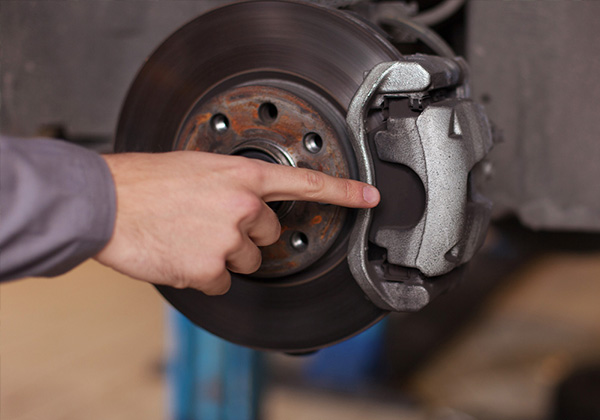
A brake pad backing plate is the rigid steel structural base of a disc brake pad, providing strength, heat management, and precise positioning for the friction material. It serves as the component to which the friction material is bonded or riveted, withstands clamping and shear forces, locates the pad in the caliper bracket, conducts heat to avoid brake fade, offers a stable surface for friction material adhesion, and prevents corrosion that may lead to pad seizure or material delamination. It is typically made of high-strength low-alloy steel with a thickness commonly between 2–8 mm.
How is Brake Pad Backing Plate Produced?
The production of brake pad backing plates mainly adopts high-precision stamping and finishing processes. Raw steel coils are uncoiled and leveled to eliminate curvature and internal stress. The steel is then fed into a progressive die press to be stamped into the specified shape including mounting ears, holes and contours, with scrap materials cut and recycled. After forming, the plates go through deburring and surface cleaning to remove burrs, oil, grease and oxide scales. Some high-end products adopt mechanical texturing to enhance the bonding strength between the steel plate and friction material. Finally, the backing plates receive surface treatment such as electroplating or powder coating and undergo dimensional, strength and appearance inspections before completion.
Electroplating of Brake Pad Backing Plate
Electroplating is a key surface treatment for brake pad backing plates, mainly to provide corrosion protection, improve the bonding performance between the steel base and friction material or adhesive, and enhance surface wear resistance. The most widely used plating type is zinc electroplating due to its balanced cost and anti-corrosion performance, while zinc-nickel alloy plating is applied in heavy-duty or high-corrosion service environments such as commercial vehicles and off-road equipment.
Electroplating Requirements for Brake Pad Backing Plate
The coating thickness for standard applications is generally 8–15 μm, and 15–25 μm for heavy-duty conditions. The plating layer must have excellent adhesion without peeling, blistering or bubbling, and maintain uniform coverage on all surfaces including holes, edges and recesses. Corrosion resistance is verified by salt spray testing with specified hours of red rust-free performance. Post-plating passivation treatment is required to further improve corrosion resistance, and hydrogen embrittlement relief baking must be carried out for high-strength steel to avoid cracking. The electroplating process must comply with environmental regulations such as RoHS and ELV, using trivalent chromium passivation instead of hexavalent chromium.
Electroplating Process for Brake Pad Backing Plate
The electroplating process starts with thorough pre-treatment including alkaline degreasing to remove oil contaminants, electrocleaning for deep purification, multiple water rinsing, acid pickling to activate the surface and remove oxides, and final rinsing with deionized water to avoid bath contamination. In the zinc electroplating stage, the backing plate is used as the cathode and pure zinc as the anode, with controlled current density, temperature and time to deposit the required coating thickness evenly with agitation assistance. After plating, the parts are rinsed, passivated to form a protective film, dried and baked at a proper temperature to remove hydrogen. The finished products are inspected for coating thickness, adhesion, corrosion resistance and surface appearance to ensure compliance with standards.